
Energy and Independence
History Doesn't Repeat Itself but it Rhymes...

At the end of March, I introduced the concept of the New Stack to describe the current determinants in the competitive advantage of nations. The New Stack encompasses 11 components grouped into the“4 I’s” — Innovation, Ideas, Investment and Independence.
That post provided a cursory analysis of a few key characteristics of Investment as it relates to financial markets and how this impacts a country’s competitiveness today. One of the key takeaways was that the components of the New Stack are intertwined — Deep and Liquid Financial Markets that range from venture capital to debt provide tremendous advantages to fund Innovation, to support Ideas, and to reinforce key components for Independence (including manufacturing, defense, etc.)
As we are seeing play out today via the conflicts in both Ukraine and the Middle East, Energy, another of the key components for Independence, remains at the forefront for global economic competitiveness. The speed of change in the global energy markets over the last few years highlights which countries have competitive advantages over others and which countries are beholden to other nations. While it has long been accepted that agency over a country’s energy supply gives a strong advantage economically for a nation, this has never been truer than in today’s world where energy plays a vital role in technology, commerce, and the standard of living for a country’s citizens.
The implications of these changes are profound for business leaders and consumers around the world in ways that might not always appear obvious. The impact will directly shape the ability of companies to deliver a wide range of goods and services and the standard of living for consumers everywhere.

We’ve Seen This Movie Before
Historians have written that one of the precipitating events that lead to the start of World War II in the Pacific was conflict over oil and energy. In the 1930s Japan had almost no oil reserves and imported over 80% of its oil from the United States. Over a series of years, the United States applied restrictions to Japan on the sale of certain types of oil (initially high-octane fuel) and high-grade scrap metal because of Japanese military expansion in Asia. As Japan continued its engagements in China, and later in French Indochina, the U.S. froze Japanese assets and imposed a total oil embargo in August 1941.
Five months later Japan attacked Pearl Harbor, and the United States officially entered the second World War.
Over the last sixty years repeated military conflicts in the Middle East reinforced the role that energy plays in global economics. From the OPEC Oil Embargo of 1973 to the first Iraq War of 1991 to today’s Middle East conflict, energy has been at the forefront of numerous geopolitical battles. While first used during the Vietnam war in the 1960s, the phrase “No Blood for Oil,” became more prevalent by those who opposed the Iraq War 35 years ago.
Fracking, Ukraine/Iran, and China — The Energy Impact to Global Business
Three seemingly independent events are greatly shaping today’s global economic situation. While each appears independent of the others, their interconnectedness is substantively forging today’s business landscape.
Fracking in the United States
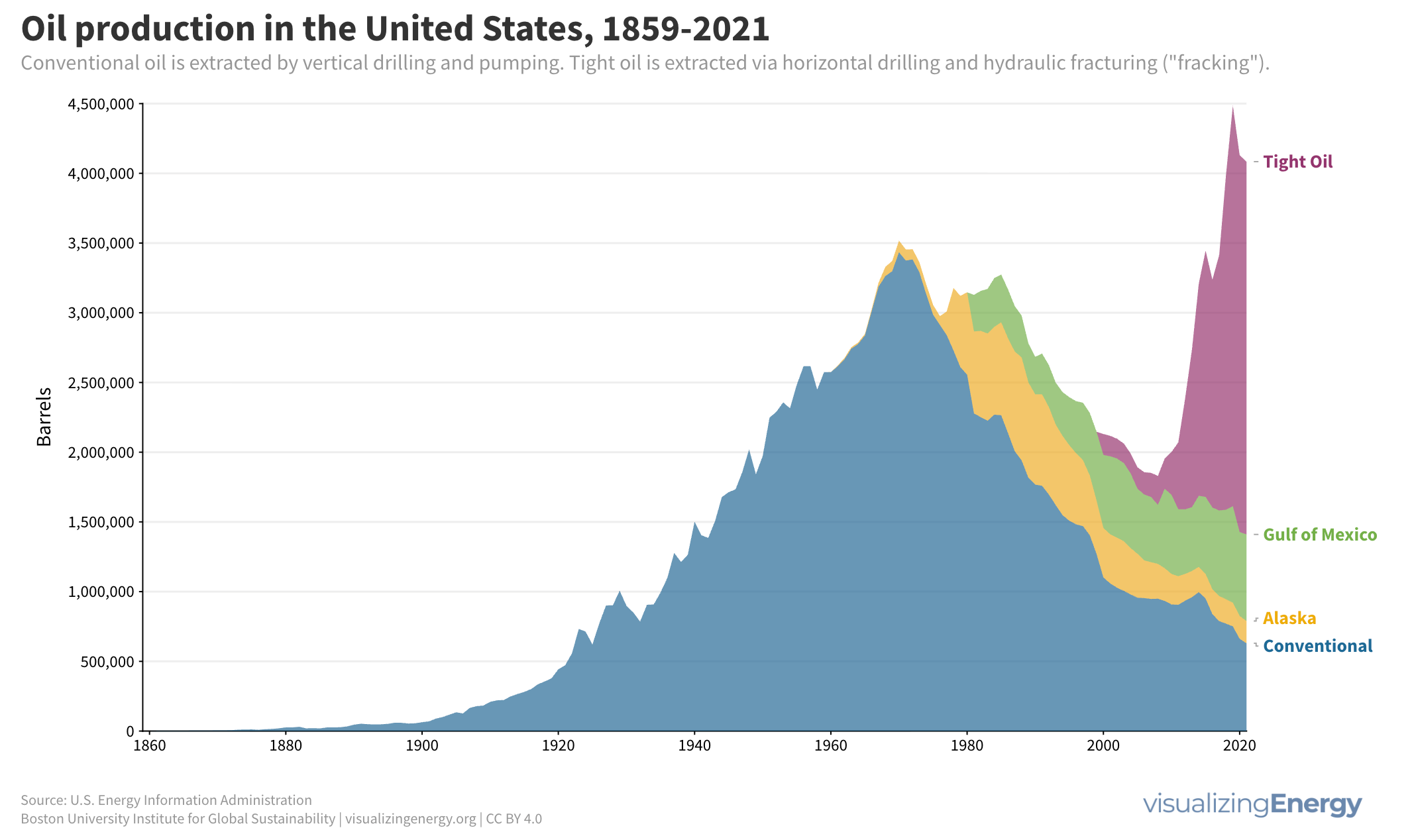
We often forget that up through the 1930s the United States was one of the world’s largest producer and exporter of oil. After the second World War the United States became a net importer, and as production of conventional wells declined after the 1960s, the shock of the Middle East oil embargo in 1973 laid bare the country’s dependence on foreign oil.
Fracking changed the United States’ energy position drastically starting in the early 2000s. Domestic oil production boomed around 2010, and today the United States is one of the world’s largest producers of oil, even as domestic conventional oil production has continued to decline.
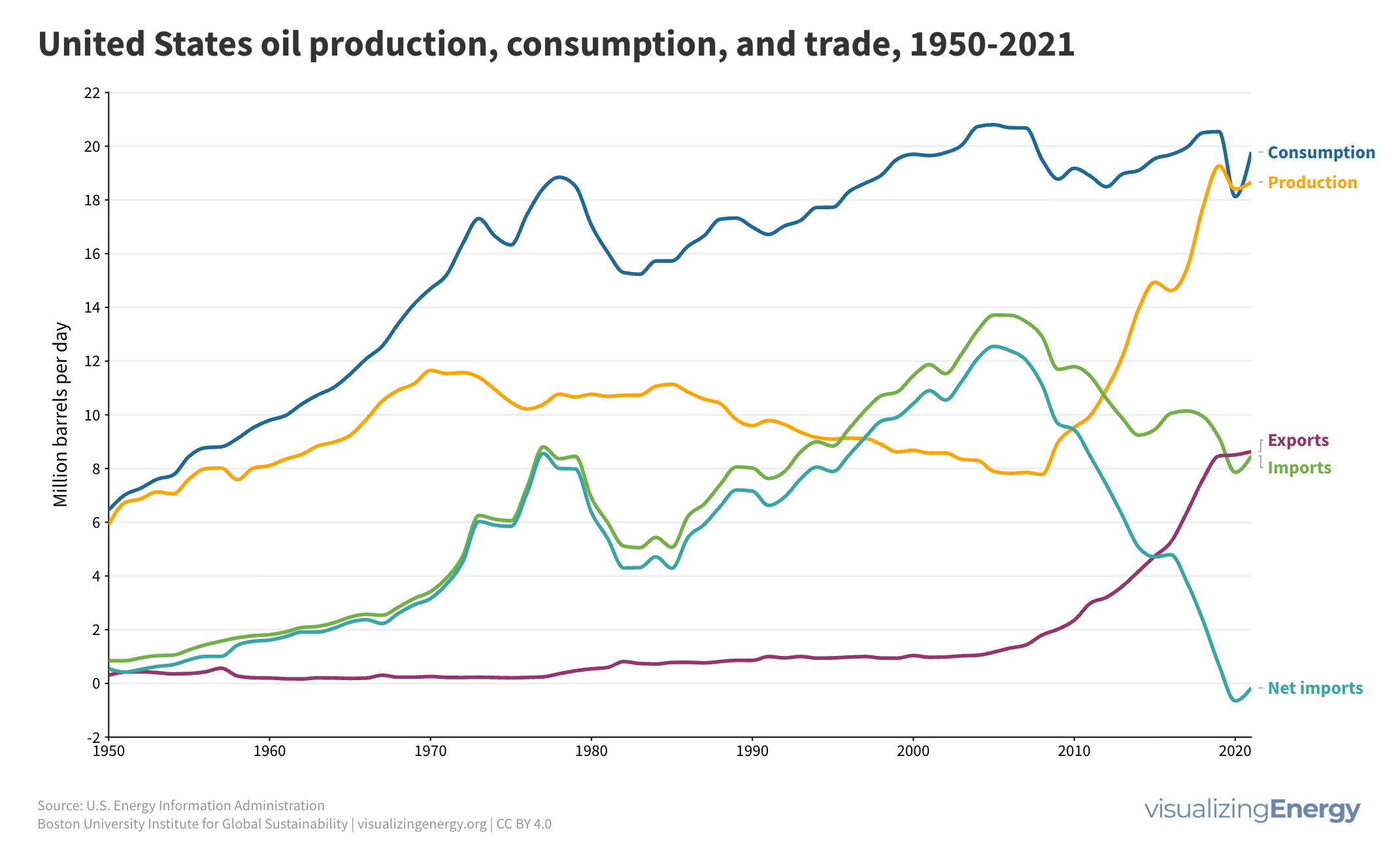
While oil consumption has remained largely level since 2000 in the United States, the country went from being a net importer of oil to a net exporter starting around 2020. This change helps explain why despite the ups and downs of oil prices over the last 15 years (ranging between ~$40 and ~$100 per barrel at various points), the country has been in a much better position to control both energy costs and mitigate the impact of fluctuating foreign production.
War in the Ukraine and European Energy Dynamics
Since the start of the Russia/Ukraine war in 2022, Western Europe has radically changed its sources of energy. In 2021 Europe purchased over 41% of its gas and 27% of its oil from Russia. Currently, these numbers are down to 12% and 3% respectively. Norway has become the EU’s largest supplier of pipeline gas, and the United States is the primary provider of LNG — now accounting for almost 50% of EU LNG imports.
The implications of these changes for European businesses and consumers are non-trivial. Even though the continent is now less beholden to Russia, the extra costs from these new sources are vast for parts of the EU. Germany is paying energy prices that are 20%-30% higher than when they purchased less expensive Russian gas prior to 2022. While Germany has attempted to balance the additional costs with locally produced wind and solar, energy prices remain substantively elevated. Four in ten industrial companies in Germany are considering production cuts in the country or relocating parts of their production capacities outside of the country due to uncertainties regarding energy policy and high energy prices.1
In addition, average EU household energy prices are currently €0.28 per kWh, but the spread amongst European countries is wide. Germany and Ireland remain among the most expensive, with rates often exceeding €0.35–€0.40 per kWh, while Norway has significantly lower rates, often below €0.15–€0.20 per kWh.
To make matters worse, the cost of automotive gas prices is substantively higher throughout Western Europe than other parts of the world. When combined with high home energy costs, spending on energy has a non-trivial impact on the average European consumer.
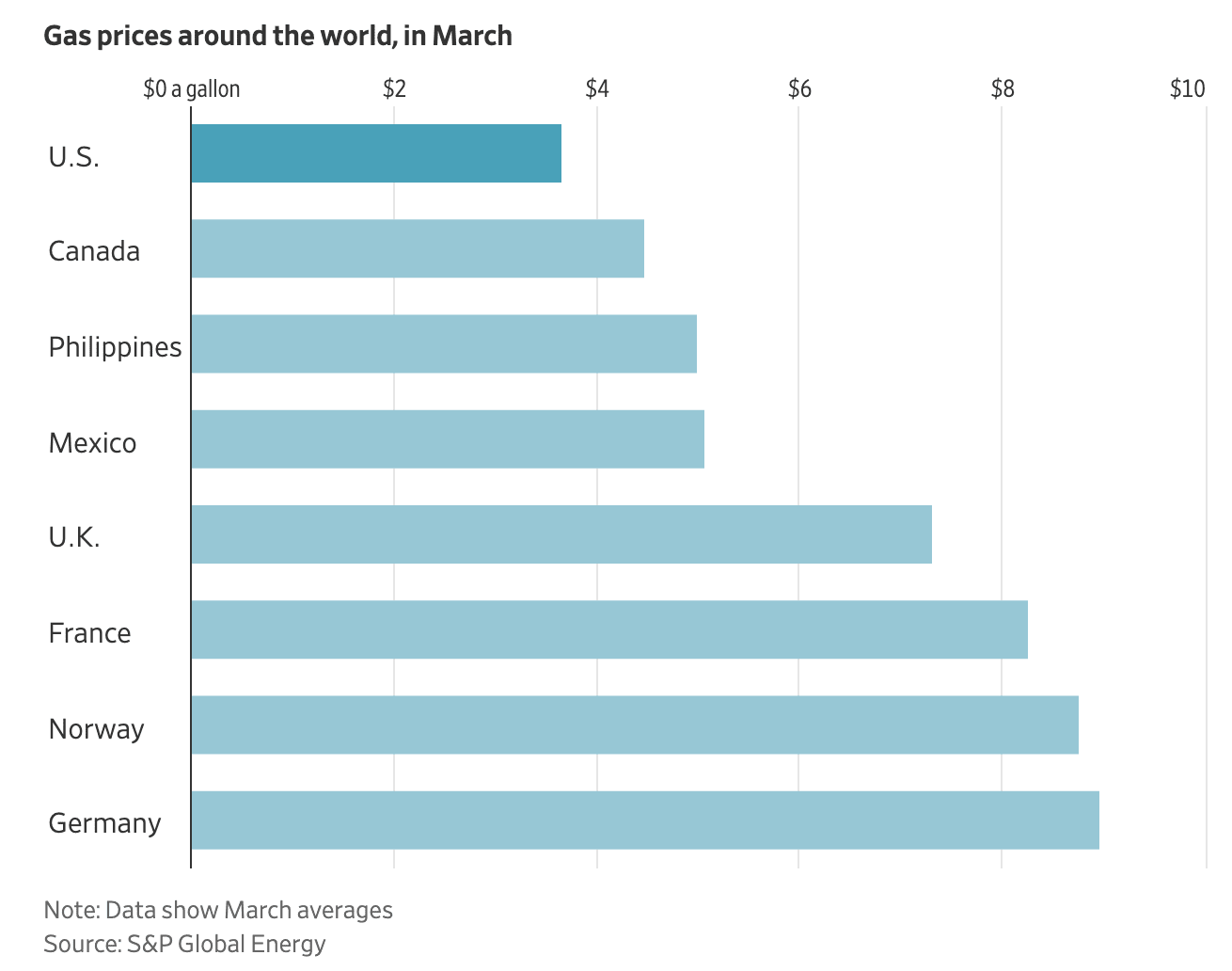
With a limited local supply of energy sources and a high cost energy structure for business and consumers (due in part to high energy taxes and grid fees), the situation in Europe creates many difficulties for their citizens.
Where China Fits into the Story
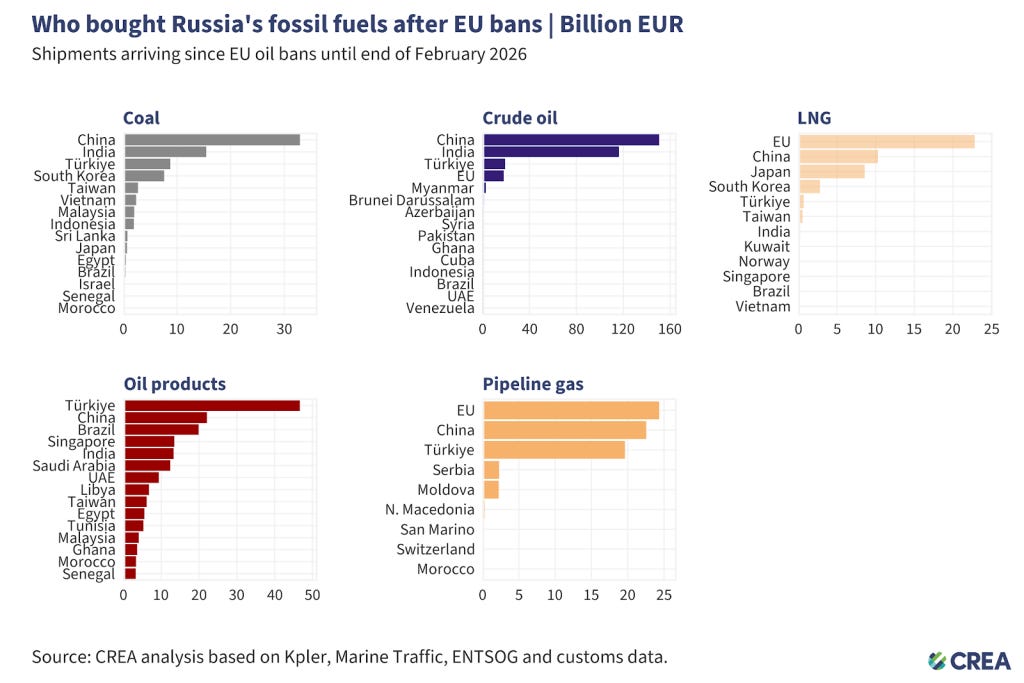
Russia has, in turn, changed where it exports it supplies of energy. China is now its major customer, and China benefits from lower prices given that European countries have capped the price they pay for Russian energy. When combined with China’s purchasing inexpensive oil from Iran (see below), China has been able to remain incredibly competitive economically as the cost of energy for manufacturing has hugely benefited from geopolitical conflicts.
As the world’s largest manufacturer (producing over 29% of global goods in 2023 and widely considered to have remained ~30% in 2025), China has a strong need for inexpensive energy. By some estimates, China’s manufacturing sector accounts for almost 60% of national energy consumption. According to the IEA, almost 70% of China’s domestic production of energy is still provided by coal and coal products. Even though China is the global leader in wind, solar, and other renewables, the country gets only 7% of its domestic energy production from these sources.
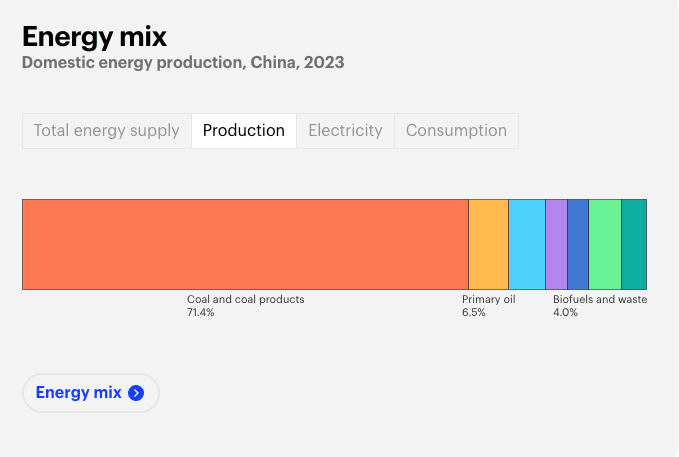
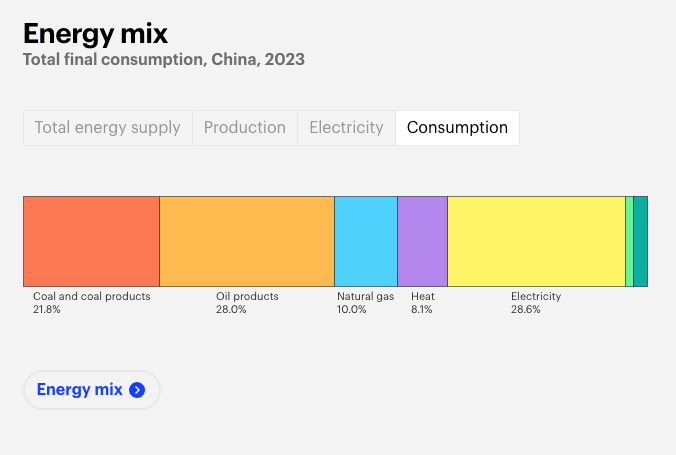
China’s energy consumption reveals a more interesting insight — 28% of the energy use is from oil and oil products, but this is only 6.5% of its local energy production. While they have ample supply of coal, they need inexpensive oil and gas to give their factories a cost advantage in manufacturing, which drives more than 25% of their economy.
Over the last decade China has benefited hugely from purchasing inexpensive oil from Russia and Iran. We see below that China has grown its purchase percentage of Iran’s total oil exports from 26% in 2017 to 90% in 2025. These purchases of Iranian oil have been at reduced prices due to Western economic sanctions on Iran and have been enabled by the global “ghost fleet” of ships illegally moving oil around the world.
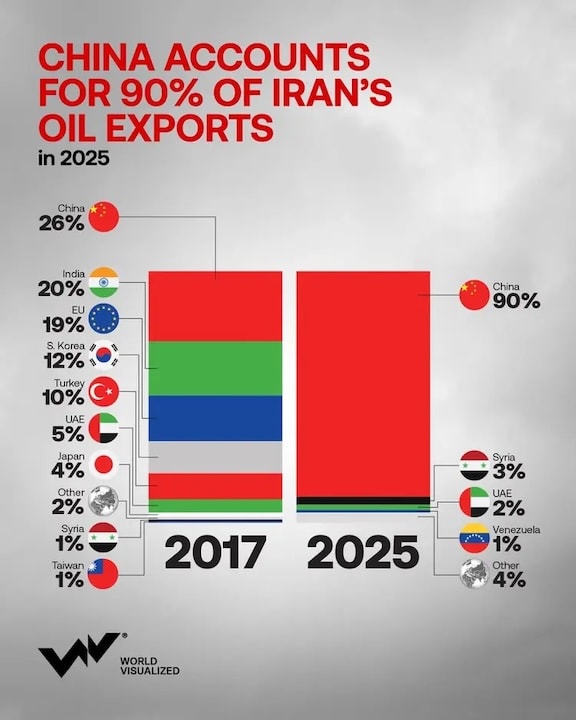
It’s easy to see how China has benefited economically from these wars and conflicts: Chinese companies have gained a massive cost advantage through lower energy costs due to global dynamics and conflicts playing out elsewhere.
Data Centers, AI, and Energy
When we layer on the impact of AI to energy costs, we see the increasing role that Energy is playing in global competitiveness. As you may recall, AI is a key component of Innovation in the New Stack. While increased digitization and data center usage is driving energy consumption and increased data center demand, according to McKinsey generative AI workloads are now ~40% of total data center capacity demand and are expected to rise to ~70% by 2030.
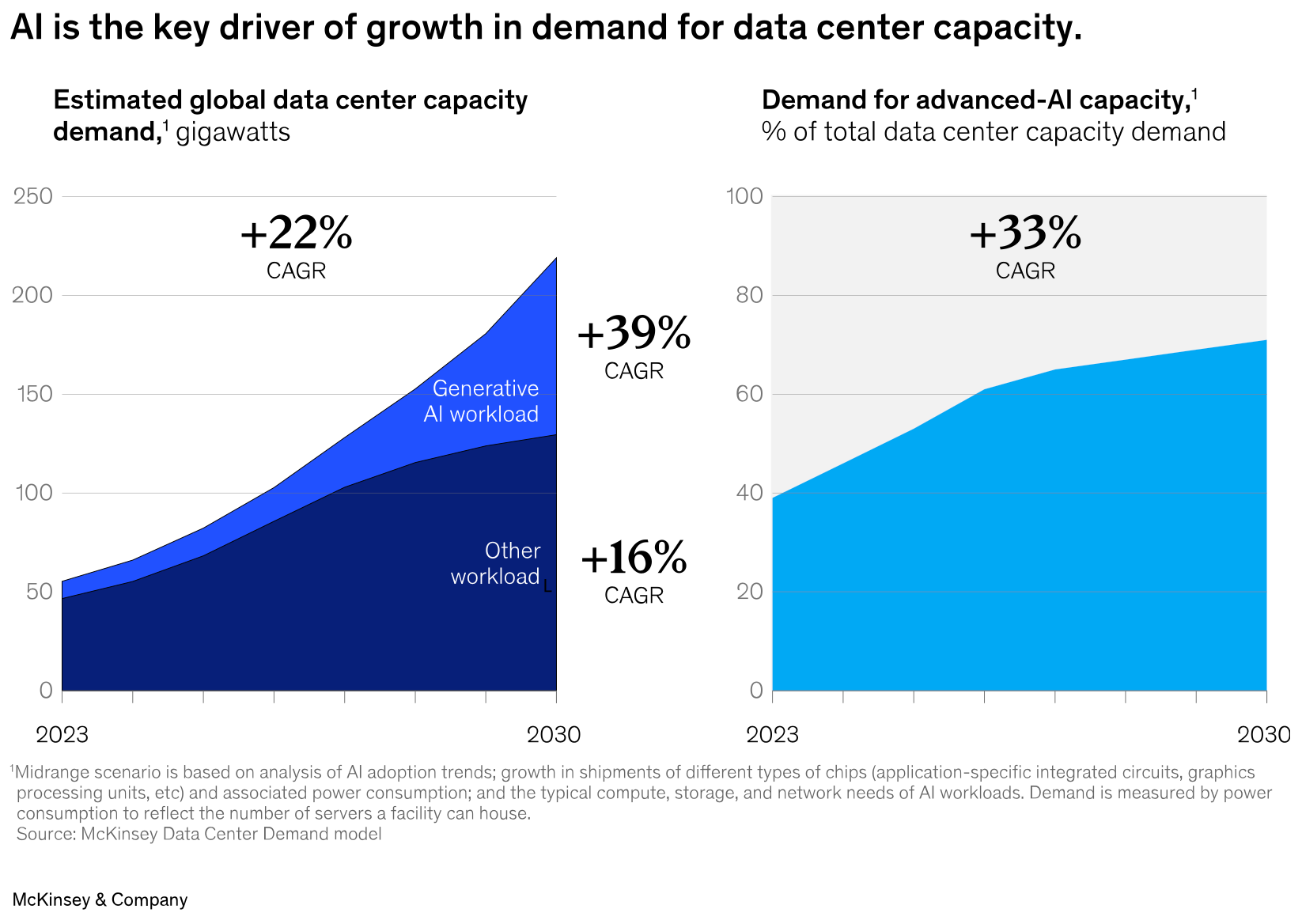
This is substantively impacting the cost of consumer energy, even in the United States:
Before 2019, electricity prices had been flat at around 13 cents per kilowatt-hour (kWh) for more than a decade—in part thanks to energy efficiency policies that reduced energy consumption as the overall domestic economy grew. By the end of 2025, however, average electricity prices in the United States increased to 19 cents per kWh, about 27% more than in 2019. In states with a high concentration of data centers like Virginia, electricity prices have increased by up to 267% over the last five years.
Source: EESI2
If one believes that AI is going to play an important economic role in the world going forward, access to reliable inexpensive energy is a key ingredient to making that possible. Those countries and companies that have access to less expensive energy will have a big advantage in the development and deployment of AI; those who don’t will fall behind.
It’s All Intertwined
What does this mean for today’s business leaders?
Geopolitical conflicts are reshaping energy flows at an unprecedented scale and speed. The buyers and sellers of energy from countries are changing sources in dramatic fashion seemingly overnight. The countries that control their energy sources have unfair competitive advantage for their companies and industries, and have lower production costs for both physical and digital goods. Lower costs equate directly to greater demand for these products both domestically and for exports.
Today’s shifting energy dynamics are creating incredible difficulties for many nations who have fewer domestic energy supplies and limited options when dealing with energy costs and sources. The brief analysis in this Substack doesn’t include the impact of these global changes to Asia, India, Central and South America, and Africa. Citizens and companies in many of these regions are being asked to work from home and conserve energy to help mitigate the strains caused by today’s Middle East conflict. While the United States and China have largely been shielded from dramatic pain to daily life so far, the same cannot be said about people in other parts of the globe.
The impact of global energy dynamics will increasingly impact the quality of life and purchasing power of individuals and families around the world, which will affect their ability to purchase goods and services regardless of where they are produced. Consumers in many parts of the world will be increasingly impacted from energy costs ranging from heating their homes to driving their cars. Companies’ ability to sell their physical and digital services depend on robust demand, and if energy becomes an increasingly larger portion of consumers’ expenditures, global demand for other goods and services will increasingly come under pressure.
Business leaders around the world, whether they are running a factory or creating new AI services, need to intimately understand how the impact of energy costs will shape both their ability to competitively deliver their goods and services, as well as companies’ and consumers’ ability to purchase these goods and services.
The system is intertwined.
https://www.cleanenergywire.org/news/energy-costs-uncertainty-fuel-german-industry-plans-cut-or-relocate-production-survey
https://www.eesi.org/articles/view/data-center-power-demands-are-contributing-to-higher-energy-bills