
Moving Forward

“I’m Scared.”
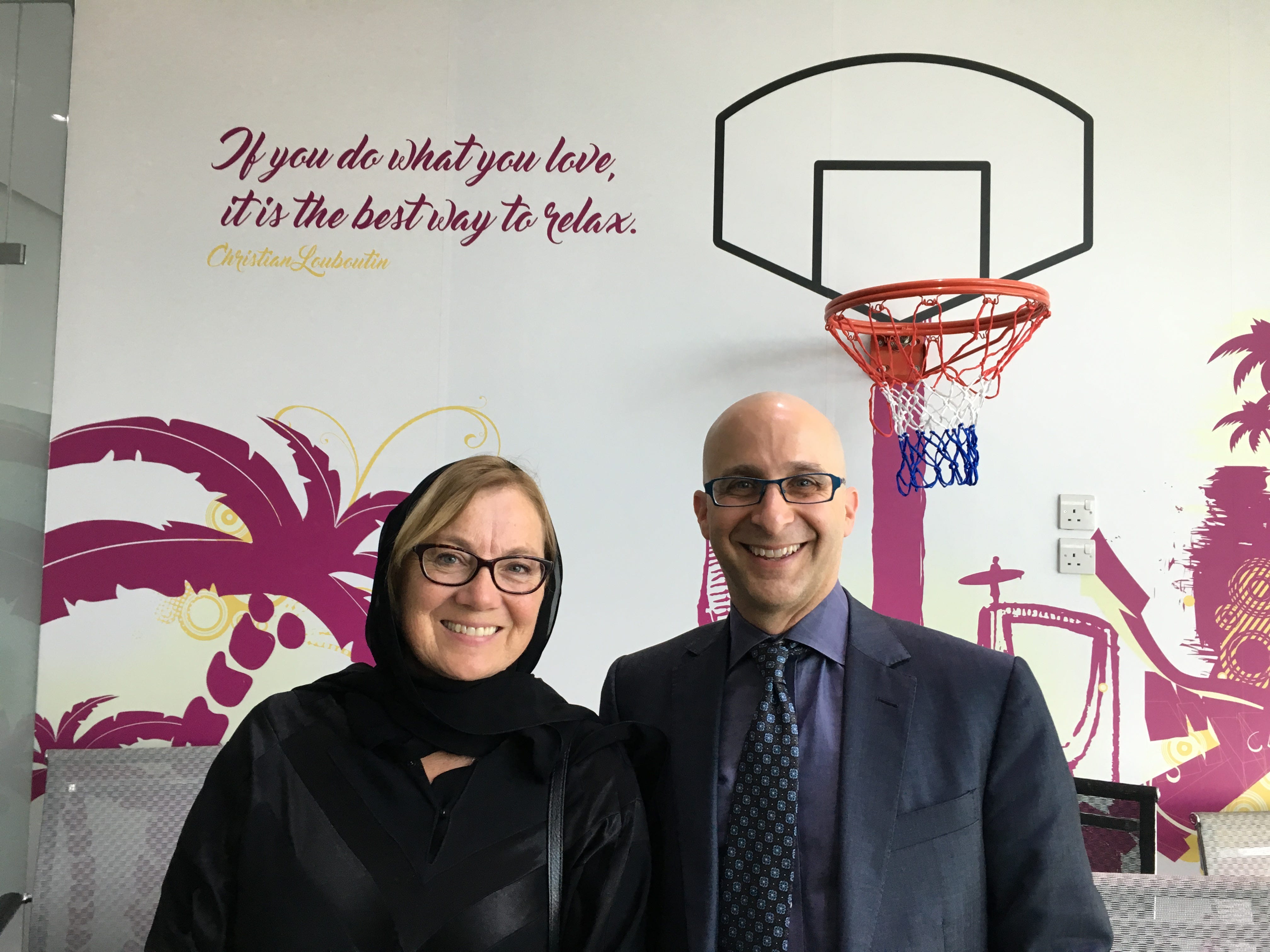
Debbie looked at me quizzically as our car sped towards San Francisco International Airport. It was March 2017, and we were on our way to Saudi Arabia as part of a Global Study Trip (GST), a graduation requirement for all Stanford Graduate School of Business MBA students. Each trip is organized by a small group of second-year students who are joined by 25 first-year students to embark on a week-long journey to study a curriculum learning the business, cultural, and social issues of a country or region. One faculty member gets to accompany each trip, which includes meeting with government, business, and other societal leaders.
I had lobbied to get on this particular GST to the Middle East. I had become friendly with one of my recently graduated students who came from Saudi, and our conversations about politics, energy markets, and social change over the previous year had a profound impact on my worldview. The more I spoke with Sultan, my former student who had taken my Entrepreneurial Finance course, the more I was exposed to unique perspectives that I had never previously considered. I soon realized I wanted to see his country with my own eyes and not only via what I read online or saw on television.
But as our car pulled up to the International Terminal at the airport, I realized that I was apprehensive about the trip. How would I actually be received in the country? An American with my last name — what would it be like? Would people be nice to me? Was I safe?
My reaction to the unknown was fear.
What I found during the trip was that the meetings and conversations I had with people in the region could have taken place anywhere in the world. Issues surrounding innovation, business transformation, and slow-moving bureaucracies all felt extremely normal. The unique parts of the trip were the discussions about the cultural and socioeconomic transitions that were just beginning in the country and surrounding region, and the optimism of the people which was distinctly palpable.
When the trip ended, Sultan, who had to be out of the country during our GST, sent me an email asking how the visit went. I responded by writing him a seven-page letter. The experiences and learnings of the GST poured out of me. If I had to summarize the gist of my message to him, I would describe it as:
I learned so much and I realized that I know nothing.
“How Are You Getting Back to Your Hotel?”
The question came from one of my dinner companions.
“I’m just going to hop an Uber.”
“No way. I’ll take you.”
I smiled on the outside but froze on the inside.
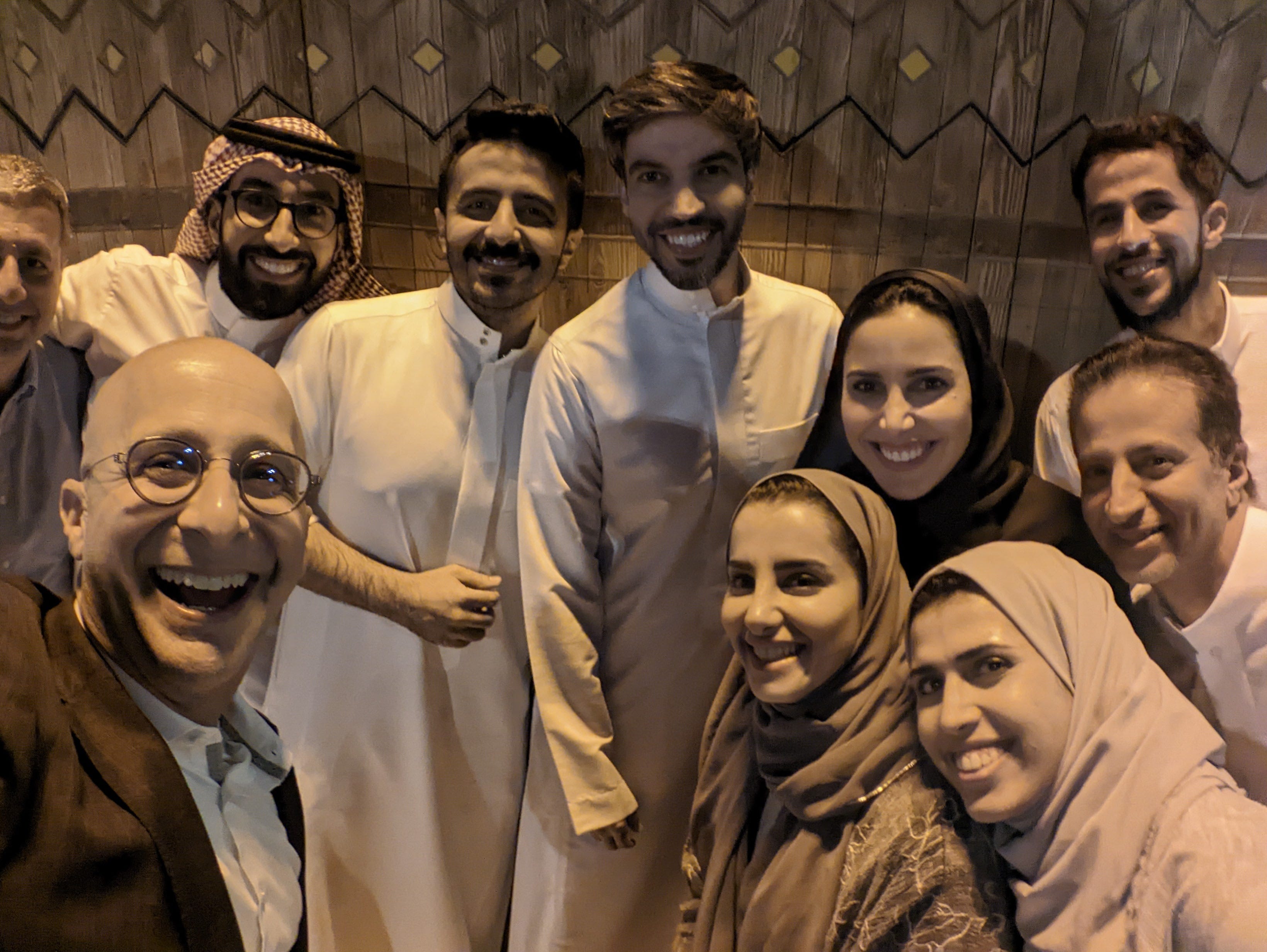
It was October 2022 and it was my first time back in Saudi since my initial visit five years prior. I was teaching a three-day course for new venture capital managers on the fundamentals of investing, and a group of young VCs and entrepreneurs joined me one evening for dinner.
I looked across the table and smiled at the young woman who had made the offer. I had no idea how this was going to work. I wasn’t her father. I wasn’t her brother. I wasn’t her husband. Only a few years earlier our being alone together in a car was not allowed in Saudi Arabia. The option of her driving was not a possibility during my first visit to the country. And while there were hints and promises in those days that change was coming, the country’s transformation had not really started to take place during my initial trip in 2017.
But this time it was different.
It was clear on this visit that the changes in the previous five years were profound. In fact, the changes were so big it was hard to get my head around them. Women had joined the labor force (thus doubling overnight the number of Saudi workers in the country), and were now in public settings co-mingling with men. The young entrepreneurs I was with at the dinner (both men and women) brought an amazing excitement as new companies and venture capital had exploded in the country. My students in the venture program were like dry sponges — absorbing the material ravenously to learn and to move forward with an almost frenetic energy.
As the dinner with this group of young people ended, we exited the front of the restaurant. The valet brought the young woman’s car forward and we hopped in. None of the workers or other restaurant guests said anything or even looked at us as we said our goodbyes. I climbed into the passenger seat and off we went towards my hotel. During the short 25-minute drive she and I spoke about how the changes in the KSA (Kingdom of Saudi Arabia) had impacted her life — her ability to travel and go back to her job at McKinsey in Dubai without having to get her father’s permission to leave the country, her driving a car in Riyadh, her being allowed to drive me (a male who was not a relative) to my hotel, etc.
She also shared that continuing to wear her hijab was something she could do with comfort and pride. She explained that how she dressed was not a sign of oppression as some in the West would assert, but rather it expressed her commitment to her faith and her comfort and happiness in that commitment.
She dropped me at my hotel, we said our farewells, and I went up to my room.
I immediately called my wife and all I could stammer was, “You are not going to believe what just happened.”
“We Should Teach a Class Together”
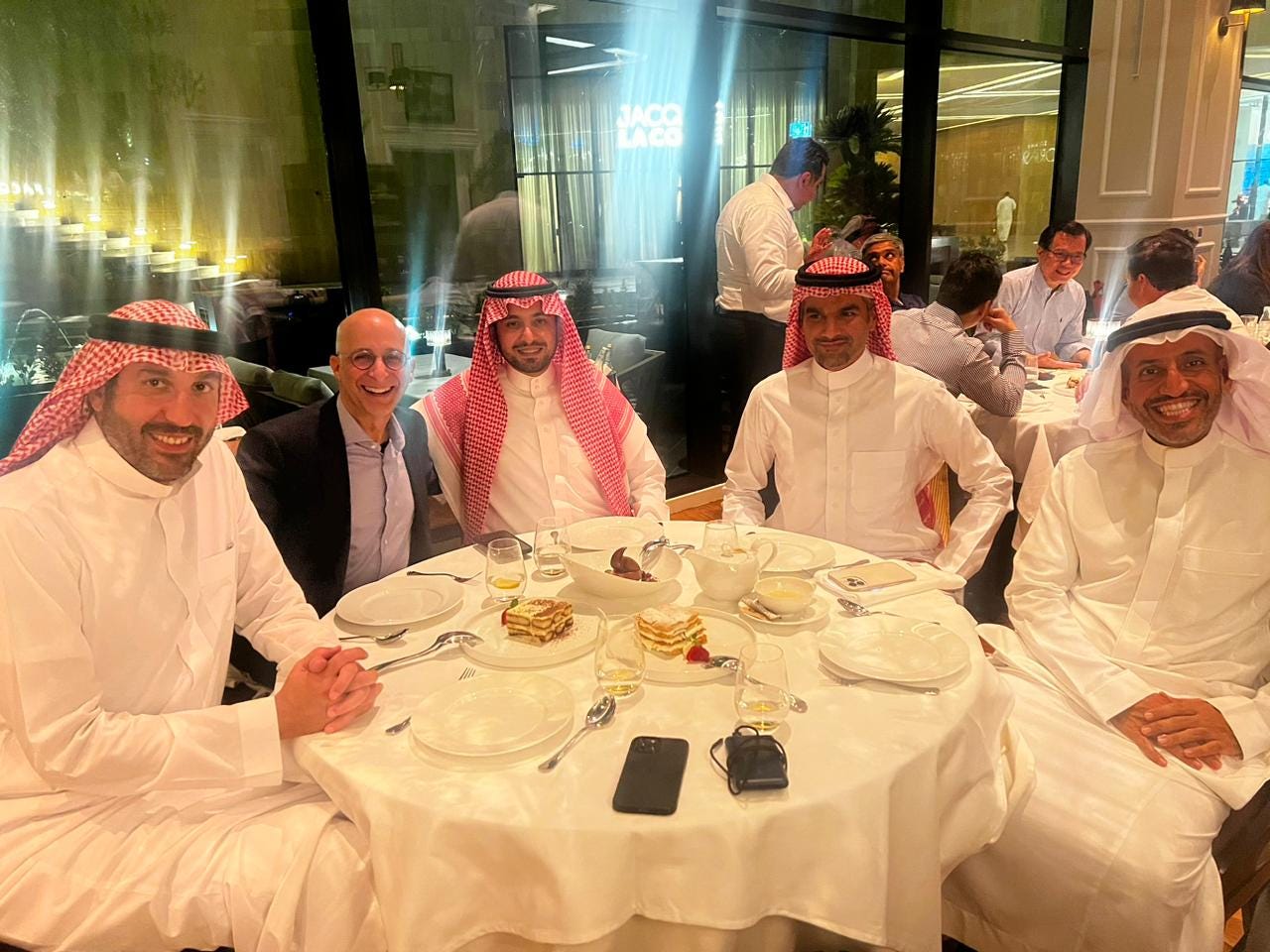
It was one year later — September 2023. I was back in Riyadh to teach another set of emerging venture capital managers, and I was having dinner with four other Stanford alumni. The five of us gathered to catch up and talk about work, families, the global economy, etc. The mood was upbeat — business was strong in the region, the economic and cultural transformations had continued unabated in Saudi Arabia, and the five of us were enjoying each other’s company. The restaurant was lively and buzzing.
One gentleman at the table, Ibrahim Almojel, was a prolific and generous alum who had obtained a PhD in Electrical Engineering at Stanford. I first met Ibrahim during my initial visit to the KSA when he hosted an event for the 30 of us on the GST. At this dinner, the five of us were discussing how Ibrahim had just finished his role as the Co-CEO of the Saudi Industrial Development Fund (SIDF). Ironically, my former student, Sultan, had been Ibrahim’s Co-CEO at SIDF and had recently assumed the helm of CEO of SIDF on his own. Over our entrees, as we talked about the economic investments and activities of SIDF, I looked over at Ibrahim and asked, “So, what are you going to do next now that you aren’t at SIDF?”
“I’m not sure. I’m thinking I’ll do some investments and maybe start a fund.”
“You know,” I said cloyingly, “we should teach a class together at Stanford about what is happening here and in the region. We could talk about the process of business transformation and building entrepreneurial ecosystems. We could explore how governments are supporting business and change. It would be really interesting. And since you don’t know what you are going to do next, you have time,” I smiled.
“That would be amazing,” he replied.
“I’m serious. I’ll follow up when I get back home to the U.S.”
In that moment optimism abounded for the country, and it seemed like fundamental positive change for the region might be right around the corner.
Unfortunately, dark times emerged two weeks later. Much of the hope and upbeat momentum was put on hold.
Undaunted, two months later, I reached out to Ibrahim and made my pitch: “I’ve been thinking. Now more than ever I think the class we discussed needs to be taught. And I think it is important that you and I are the two people together in the front of the room. We need to model great behavior and show what’s possible to others. And it needs to be the two of us teaching the class with our different backgrounds.”
He responded, “For Stanford, anything.”
Over the next year I fought with the Stanford bureaucracy to get a new course approved that covered the changes in the region. It was frustrating beyond words —I’d previously taught nine different academic courses and almost 20% of the students who have ever graduated from the GSB. It wasn’t like I didn’t know how to teach a course with a strong intellectual and academic foundation, and I had credibility having previously started several successful new courses from scratch. Yet, getting this class over the finish line was one of the hardest things I have ever done while at the university.
I don’t think it was the topic that created the friction, per se. Rather it was a bureaucracy that wasn’t interested in supporting the opportunity to educate in real-time about one of the most important business and global transformations currently underway. In addition some leaders at the school seemed not to see the benefit of showcasing two diverse Stanford alums leaning into the academic foundations of transformation with the symbolism of our different backgrounds. More mundane issues around bureaucratic processes and artificial hierarchies seemed to take priority.
However, taking “no” for an answer wasn’t an option from my perspective. I was relentless.
And the bureaucracy did not win.
“Can We Come?”
My parents had previously shared that they were finished with overseas vacations. After traveling extensively for the past three decades, and after going to Egypt in 2023 and Italy in 2024, they decided at the ages of 82 to spend the rest of their healthy traveling years visiting the United States to see our vast and beautiful country. But in May of this year, as it looked like I was going head back to Saudi Arabia once again to teach the venture capital management program, they reached out with a question.
“We were thinking we’d like to join you. You’ve talked about Saudi Arabia so much that we’d like to see it. And to go with you would be special,” my mom proffered. My parents had been to Jordan, Egypt, and Turkey, but those were the only Islamic countries they had visited in the Middle East.
“Sure,” I replied. “Let me see if we can also do some things together on the trip that I haven’t done when I’ve been there.”
As I write this Substack, my parents, wife, and I are flying back to the United States after spending 10 days in Saudi Arabia and the UAE. It was amazing to be together in Dubai, AlUla (spectacularly beautiful) and Riyadh. However, of all the activities in the trip, what I think I enjoyed the most was seeing my parents learn not only about the history and culture of these countries, but more importantly, their meeting my friends and former students.
The most frequent comment I received from our hosts was consistent: “Thank you for bringing your parents and showing them our country.”
While I appreciate the sentiment, I think it is more important that I thank them for the lessons they have taught me about the world, and the kindness and openness they have shown in sharing their lives, their families, and their lived experiences.
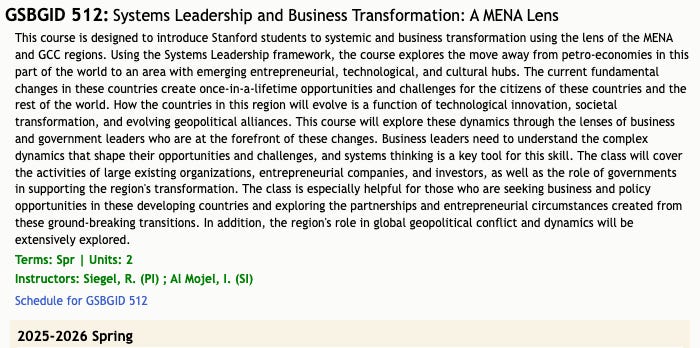
In April of next year Ibrahim and I will finally teach our new course. We will study an historically unique situation: how economies transform from a commodity-driven foundation into a modern technologically competitive world and do so from an affluent position versus a poor one.
I have no idea if our students at Stanford will find the new course of interest. The issues we will study are far removed from the entrepreneurial startups in Silicon Valley that so many of our students seem interested in joining. Right now, a disproportionate number of our current MBAs are largely focused on chasing their professional ambitions while in the heart of Silicon Valley.
To be honest, I was no different at their age.
But I hope that some will be curious enough to explore the geopolitical and socioeconomic issues shaping our planet, the interconnectedness of our species (globalization is not slowing down — it’s just changing), and maybe a few of them will choose to spend a significant part of their careers participating in the amazing happenings around the world.
My friend, mentor, and former co-teacher Jeff Immelt likes to say that in our day it was exciting to go overseas and have an expat assignment. When we taught together, Jeff used to encourage our students to consider an alternative career path to what has become the undifferentiated experience of startup life for many Stanford students. He wanted our students to go out into the world and not fixate on the Bay Area.
I hope some will heed his advice.
For me, if nothing else, I have learned that it is never too late to be a student of an increasingly interconnected world. And I have been lucky enough to be able to share what I see around the planet with our children:
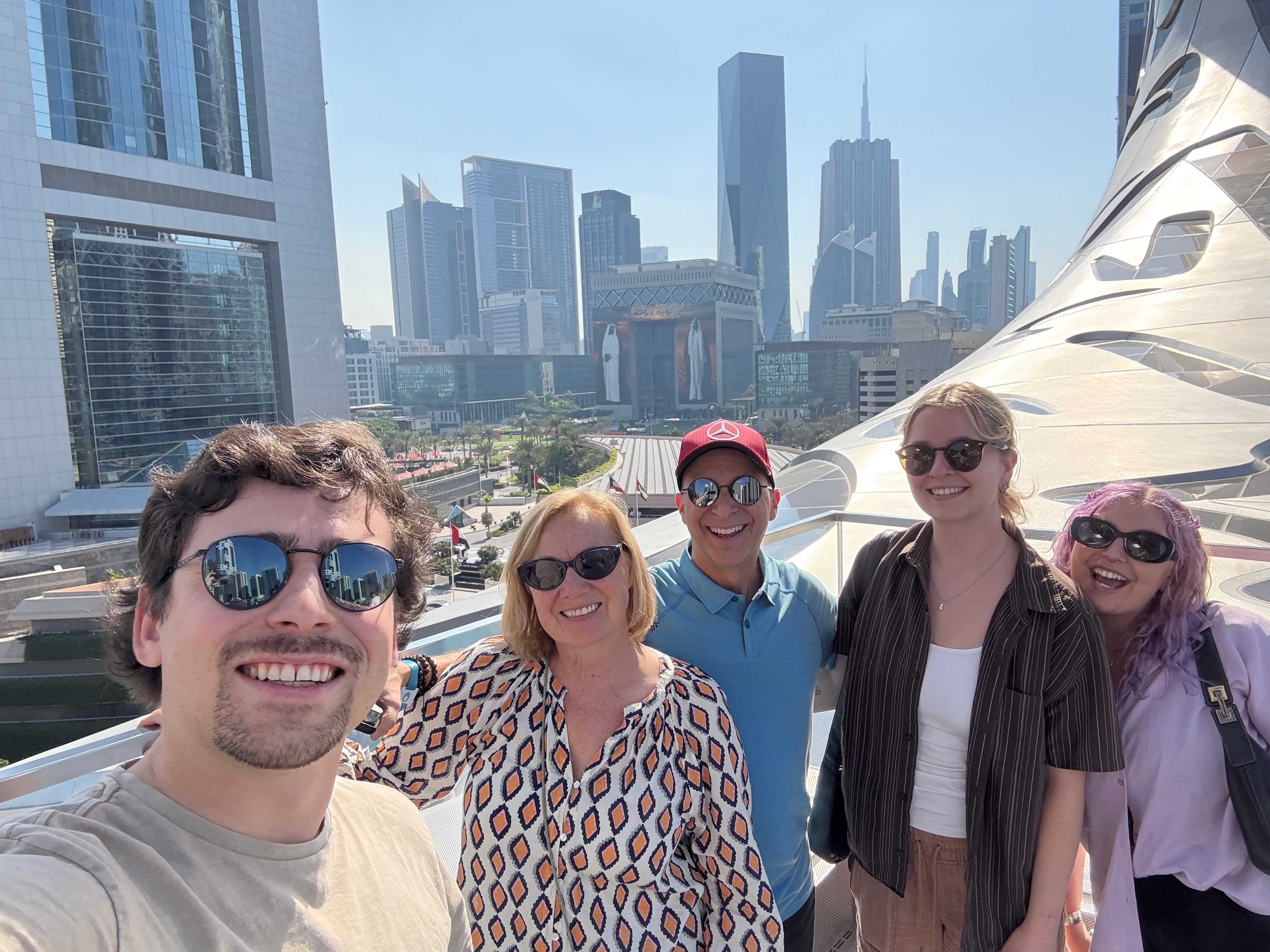
and now with my parents:
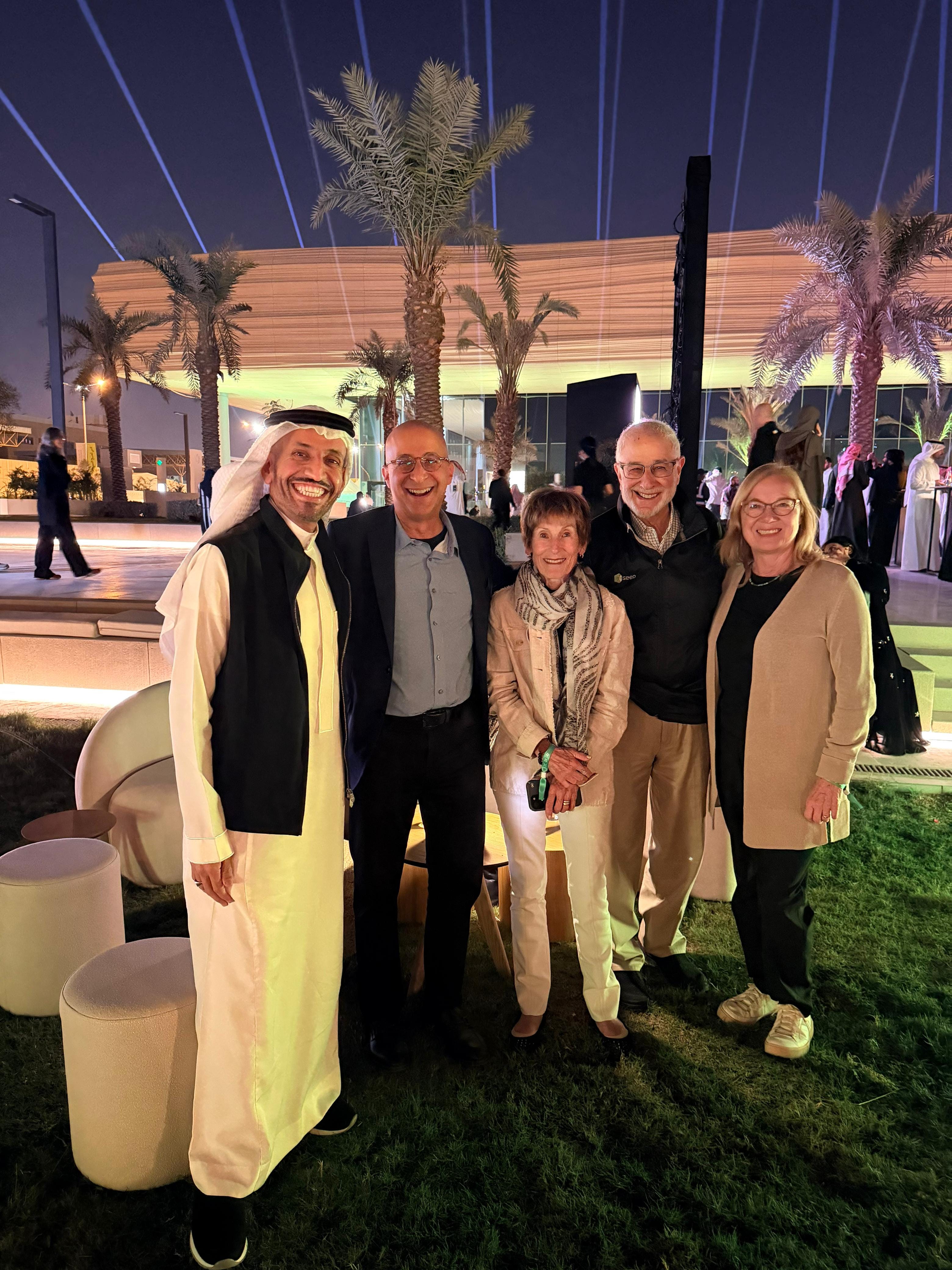
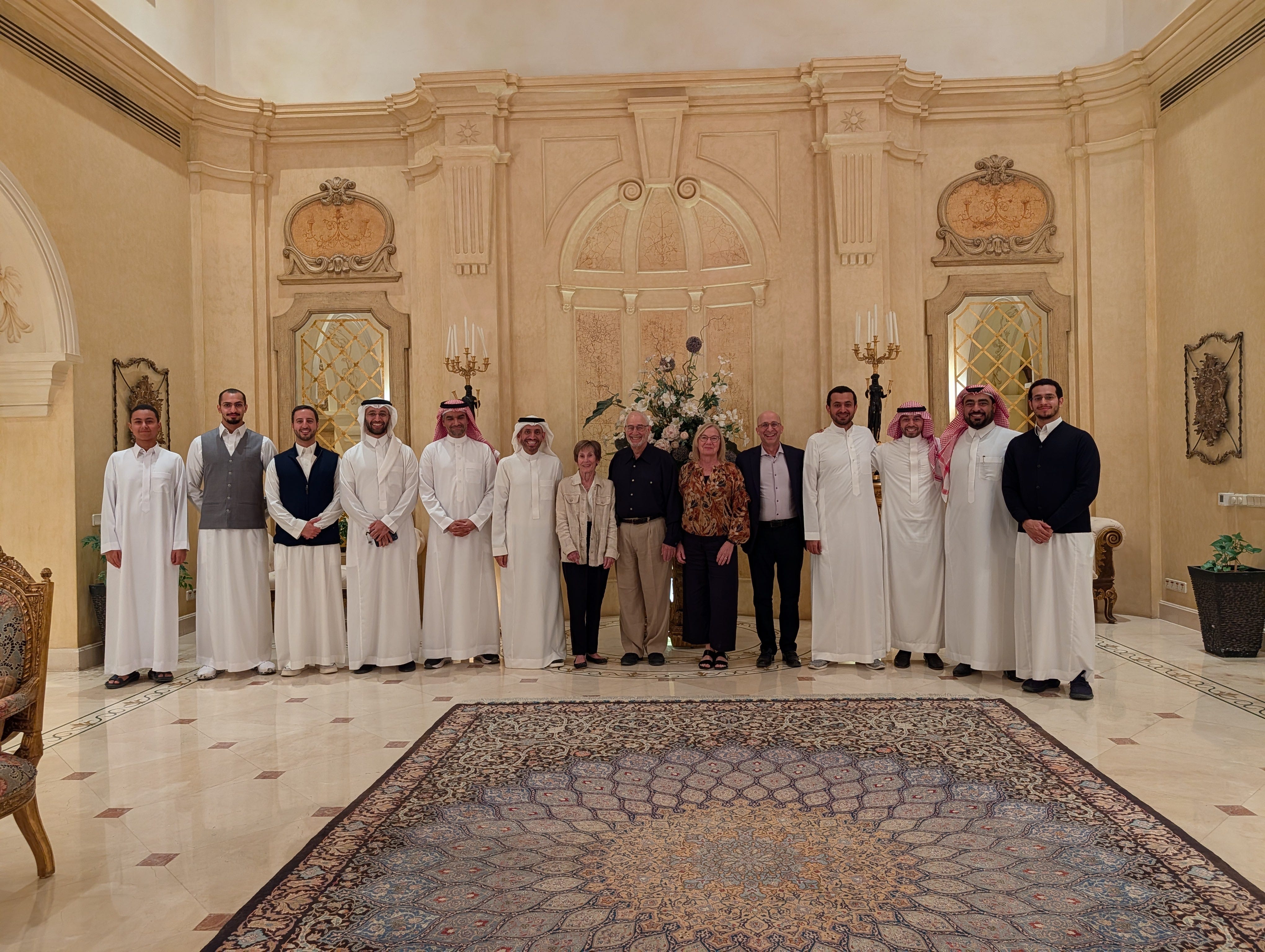
I cannot wait to teach our new course.
What a gift you're giving to the world, Rob! Can't wait!
Wow! This has truly been a long time coming — congratulations Rob! I’m excited to meet Ibrahim in KSA coming up this winter, and I’m even more excited to be taking this class with you both! It’s a great time to be at the GSB! 🙏🏼